One of the quiet ways businesses overpay for waste is being on the wrong bin size or collection frequency — either paying to lift half-empty bins, or squeezing in extra collections because the bin is always overflowing. Getting both right is where the easy savings are. Here is a practical guide.
Common commercial bin sizes
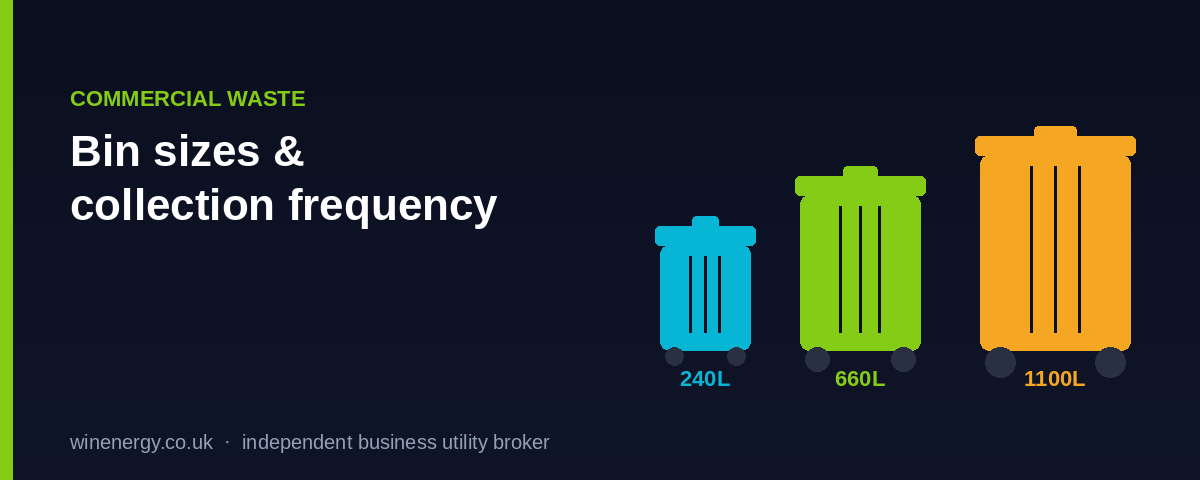
Most commercial waste comes in a familiar range of containers. Typical options include:
- 240L and 360L wheelie bins — similar to a large domestic bin, suited to smaller shops and offices.
- 660L and 1100L bins — the standard larger bins for busier premises and hospitality.
- Sacks — useful where space is tight or waste volumes are low or irregular.
- Roll-on/roll-off and compactors — for large-volume or industrial sites.
The right choice depends on how much waste you produce, how much space you have, and how often it can be collected.
Matching collection frequency to your volume
Collections can run anywhere from multiple times a week to fortnightly. The aim is simple: your bin should be close to full at each collection, not overflowing and not half-empty. If your bins are always overflowing, you likely need a bigger bin or more frequent collection; if they are rarely full, you are probably paying for lifts you do not need.
Segregation changes the picture
Separating recycling and food waste from general waste doesn't just help you comply with the rules — it changes how much general (the most expensive) waste you produce, and therefore the bin size and frequency you need. Right-sizing and good segregation work together to cut your bill. We cover the numbers in our guide on commercial waste costs.
Signs you are on the wrong setup
- Bins regularly overflowing, or extra sacks piling up beside them.
- Bins collected while still half-empty.
- Paying for a stream you barely use.
- No change to your service in years, despite your business changing.
How Win Energy helps
We compare commercial waste collection across a panel of licensed UK carriers and, just as importantly, right-size your bins and collection frequency to what your business actually produces — so you are not paying for empty space or emergency extra lifts.
Not sure your bins and collections are the right size? Send us your current waste bill and we will review it — free, no obligation. Call 0845 862 1947 or get in touch.
Bin sizing sounds trivial, but it is one of the most common places businesses lose money on waste. Match the container and frequency to your real volumes, keep your recycling separate, and you will pay for what you use — no more, no less.